Agra + Jaipur
In November 2019 I spent a week in Gurgaon, India on a business trip. I was itching to cover more ground so I booked day tours to Agra and Jaipur.
“Have you heard about the truck culture in India?” my guide Karni Singh asks. Indian truck drivers adorn the backs of their trucks with colorful cloths that flap wildly down the motorways. “They also write quotes, witty jokes, philosophical things. They also just write names of family and friends. And almost always the names of their exes.” I laugh. Even though I can’t make sense of the Hindi painted onto the sides and backs of each truck, I see that each has a distinct personality. It feels like an externalized, motorized version of the driver inside.
My guide for my Jaipur Pink City tour has a masters in French literature. How many people in his school studied this subject? One. His passion project is translating French plays into Hindi. When he speaks, a “donc” slips out every few sentences. It’s endearing.
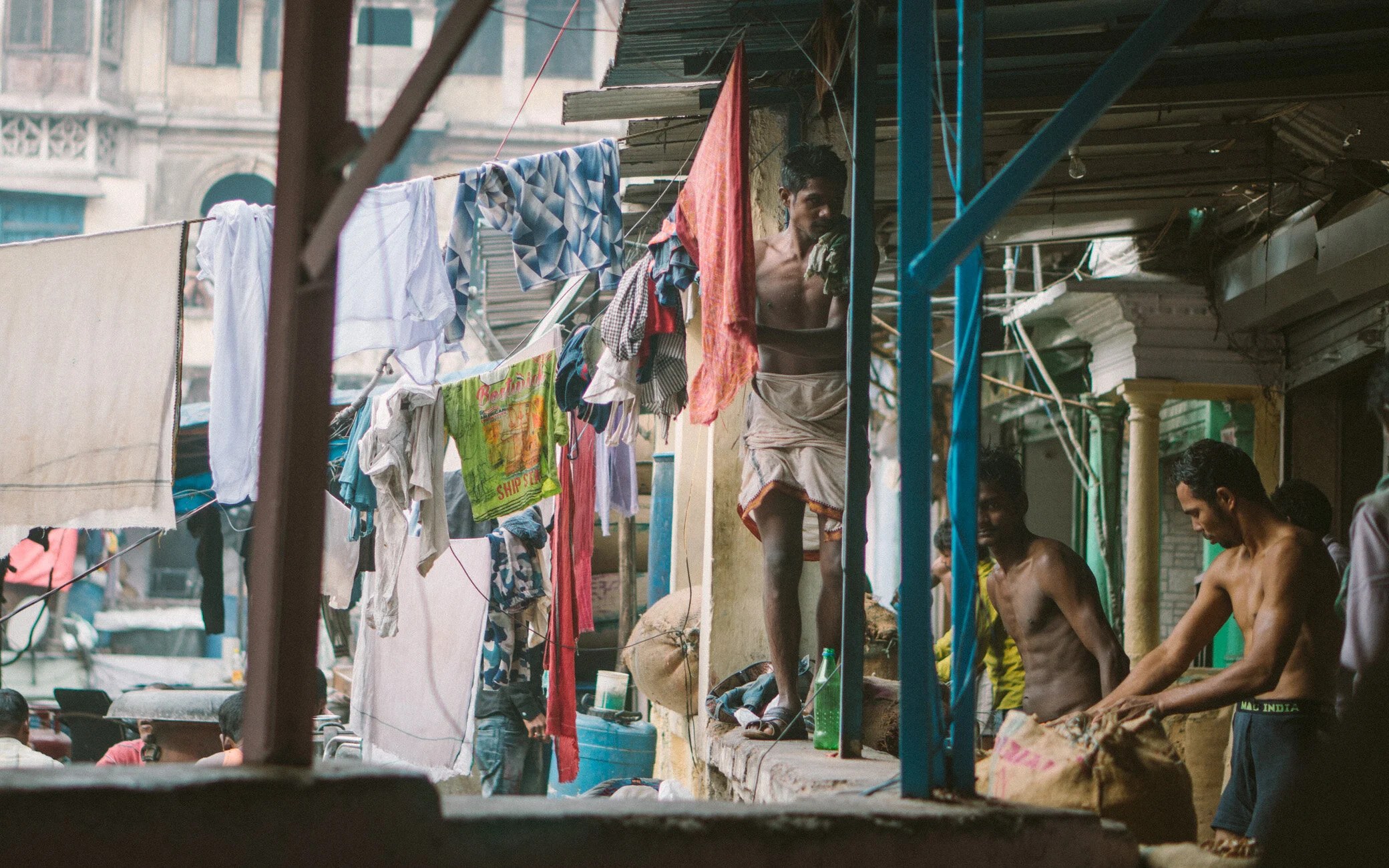
I look out the window of the car. Teenage girls in braids and blue school uniforms. A man wearing a pink jumpsuit along a perfectly matching teal pastel backdrop. Loose bricks and piles of rubble are shoveled into molehills; it looks like the sidewalk is tearing itself apart. Three men pedal their bikes each pulling cart of flowers. Stray dogs. The morning sun is a red-orange hazy orb. One fat brown cow.
Karni tells me about the caste system that has since been abolished, but is still an undercurrent. The men of the Singh caste can be identified by their earrings, he says. I can see his.
I see two boys coding hands as they ride their bikes through a side street. We make eye contact and they giggle sweetly before looking away, abashed.
We turn onto the highway, peppered with signs in big bold letters that warn the unruly to “Maintain lane discipline” and that “Over speeding will invite prosecution.” Two kids sip drinks on the back of dad’s motorcycle.
We pass through Shahjahanpur, dubbed “Japan of India” because so many Japanese factories are there.
I spy a flock of rowdy monkeys on the side of the freeway and we pull over. Two shopkeepers were selling watermelons from their carts. The monkeys go nuts. It is hard to tell if this is an intentional tourist “trap” to entertain foreign visitors, or just serendipity.
Jaipur is the capital and the largest city of the Indian state of Rajasthan. Rajasthan is a desert region in the west. Karni tells me that North India is more mixed with immigrants from Arabic countries or Iran. South India is more “Indian” and more conservative, he says.
At the palace, the home of Jaipur royal family, I was surprised to see hurried workers stringing up colorful pink and yellow flowers and cloths, sequins and lights around the palace inner courtyards. A wedding was happening tonight. The royal family may host wedding receptions for their close family friends.
I was lucky to be at the right place at the right time.