Old Delhi
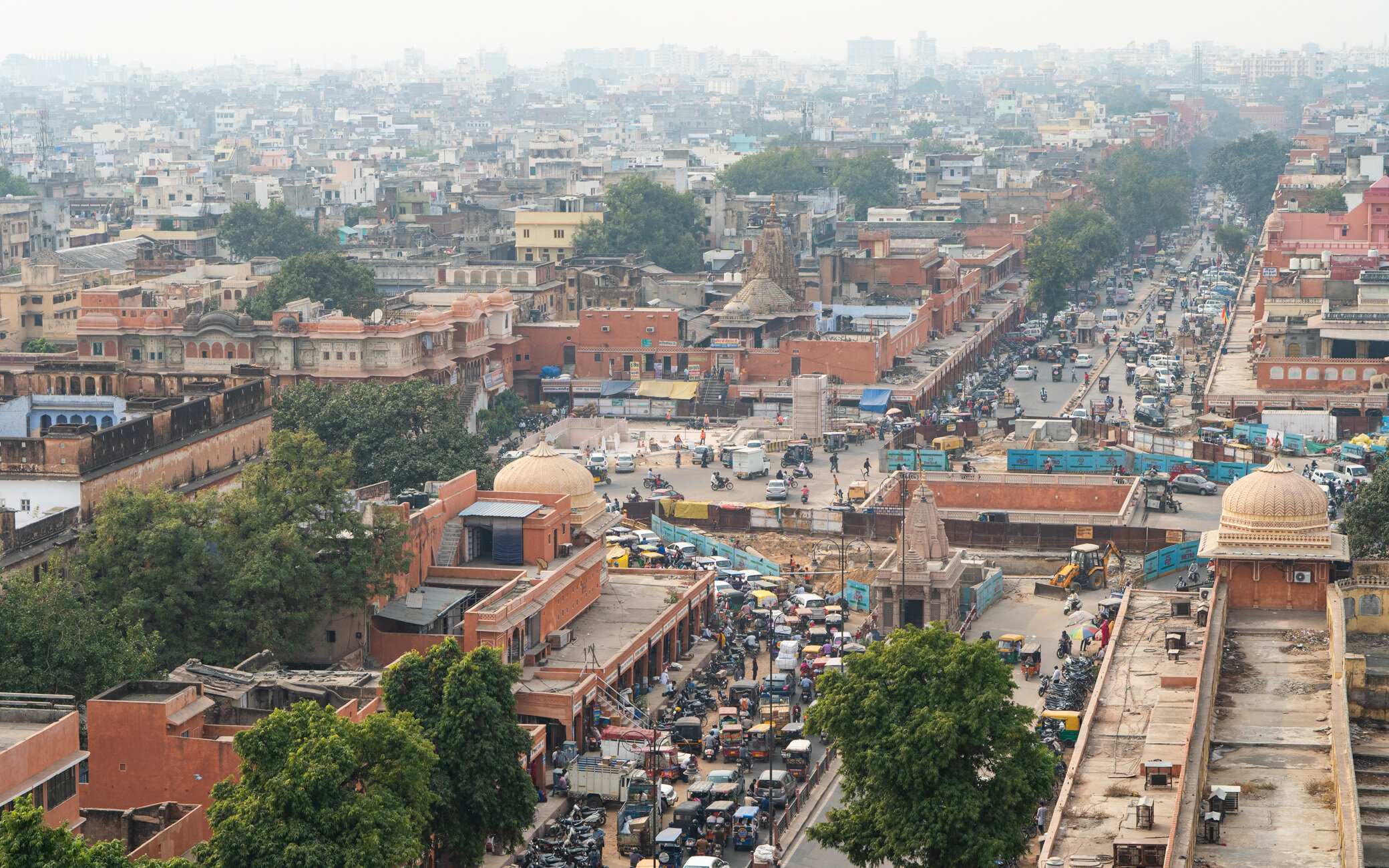
Men crouch by their storefronts, pouring basins of cold water over their leathery skin. As a part of their morning ritual the shopkeepers of Old Delhi bathe their bodies out in the open. The typically hectic Chandni Chowk market is quiet at 6am. But tucked in a winding alley while the rest of the world yawns awake, a scant team of five workers toil away. They are kulcha bread makers who bake and distribute 40 thousand kulcha breads every day.
Here I am in the heart of it all, to witness the intimate ritual of Old Delhi waking up.
These kulcha makers move like clockwork. Each man has one job: one man manages the oven. One man takes the baked kulcha tray and slides it across the ground to the next man. This man constructs neat stacks 24 trays high. Another man has the job of moving these stacks back and forth. This routine outputs 4 breads every 3 seconds!
This is impressive manpower, but Anchit reminds me there are kulcha machines that do this work far more efficiently. In this case though, technology is purposefully set aside for the sake of creating more jobs.
Next, we bike through Khari Baoli, Asia's largest spice market. Anchit points out a women shopkeeper, calm and poised. She’s the only woman shopkeeper in this market and she took on this work as the head of the household when the patriarch of the family died. We make an unexpected turn into a building and spiral up an outdoor staircase where spice workers labored away on each level. Anchit equates this to modern day slavery; they work for 10 months at a time toiling and living in these quarters without seeing their family. During the other 2 months they return home, but only to provide the manpower to swap out the farm crops.
Our final destination is the Sikh temple of the old city, Gurudwara Sis Ganj Sahib ji. We take off our shoes and glide through a shallow pool of water to clean our feet. We also tie pink cloths to cover our hair before stepping inside the place of worship. Unexpectedly, I find a community kitchen beyond the prayer halls. It’s all hands on deck: women are sitting crossed legged on the ground rolling kulcha dough into balls. A portly man oversees a massive boiling pot of lentils, the lip of the pot rising from his feet up to his waist. Outside under an awning, women and men sit together and chop vegetables. These are men and women are all volunteers, donating their time to the community before they start their work day. The Sikh religion focuses on doing good. I learn that every man and woman must donate 10% of their income or 10% of their time volunteering.
We visit the mess hall where men and women sit in neat rows, eating from their trays, drinking chai. A young boy walks around scooping lentils onto their plates. A man smiles at me and insists I take a bag of mystery crackers. This is why no one in Old Delhi ever dies of starvation, Anchit proclaims proudly. Anyone can visit the temple for a meal, even if they are not Sikh. Free housing is provided, too. No questions asked.
That was the final leg of an eye-opening day. But let’s rewind—how did I get here? For my last day of my business trip in India I booked a city bike tour with SpinMonkey Tours. It started at 6am. I was staying in the city of Gurgaon which meant I needed to get up at 4am to take a long taxi ride. When I was dropped off the sun had not yet risen. All the shops on the block were closed. Wild dogs roamed the unkempt street. I had no idea if I was where I should be. Many adventure starts with slight discomfort and nervous anticipation, after all. The discomfort was quickly forgotten after I was greeted by Anchit, the founder of the bike tour company. As we wove through the overwhelming traffic of Old Delhi via bike, dodging rickshaws, pedestrians, horse wheeled carts, mopeds, and the occasional water buffalo, he showed me the city through his eyes.